Academic journey
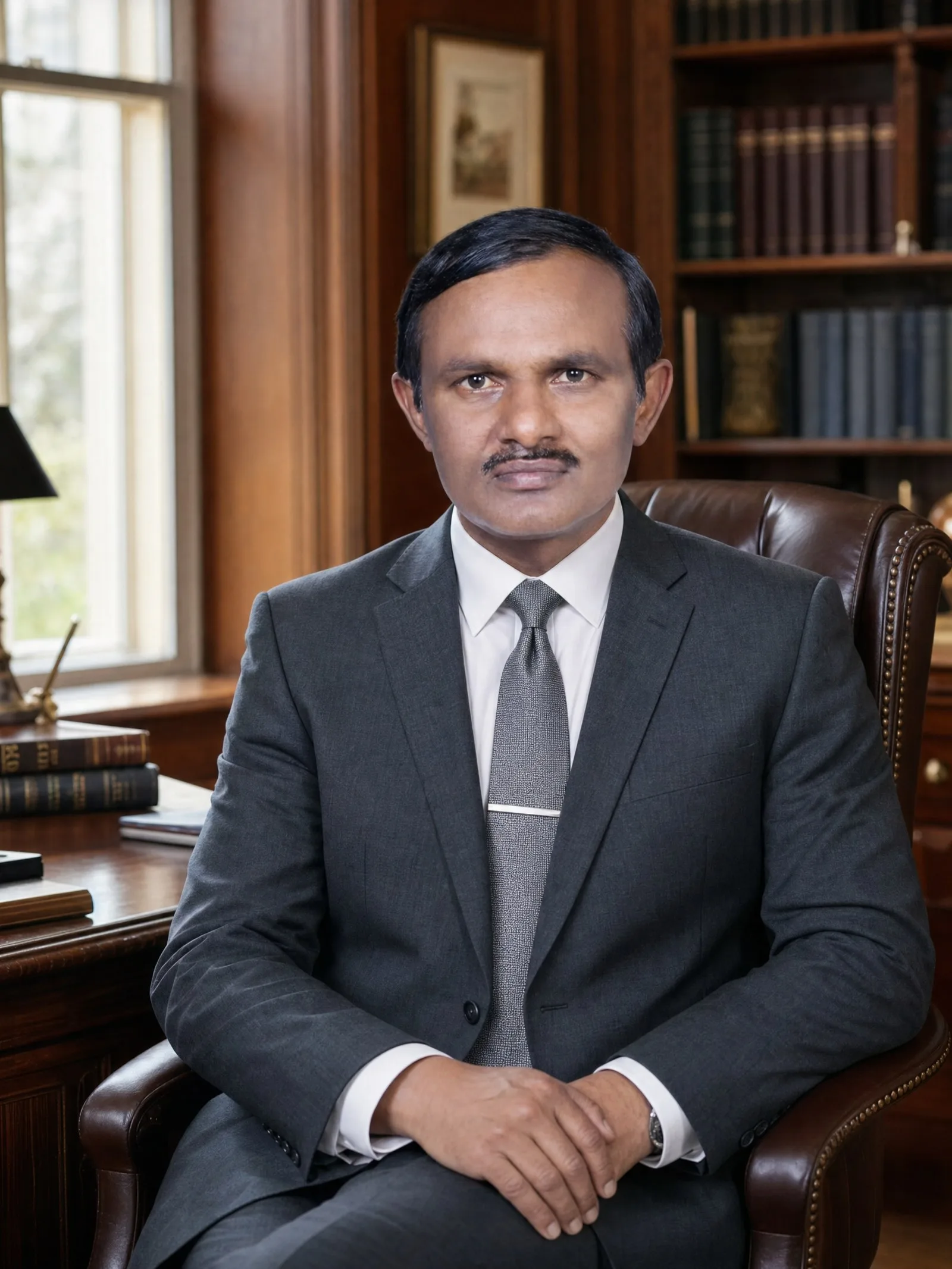
Nara Nageswara Rao was born into a poor family in the Ranga Reddy district of Telangana, with a disability from birth now assessed at eighty-five per cent. He took five degrees against those odds — a B.E. in Computer Science and Engineering, an LL.B., an M.A. in Sociology, an MBA in Human Resources and a doctorate — and has spent more than twenty-three years turning that education back towards the people who share his starting point.
His PhD examined the empowerment of differently abled persons through corporate social responsibility, and the Ministry of Social Justice and Empowerment of the Government of India made him a fellow for the research. The question it asks — how the obligations companies already carry can be made to reach disabled citizens in practice — has stayed the working question of his career.
Most of that career has been spent inside the statutory machinery rather than outside it. He has served as a Child Welfare Committee member and as a District Inspection Committee member for child care institutions under the Juvenile Justice Act, 2015; on the State Advisory Board; on the committee that formulated the Telangana State Rules under the Rights of Persons with Disabilities Act, 2016; on the expert committee identifying suitable employment for disabled people in Telangana; on district-level disability committees in Ranga Reddy and Hyderabad; on district local level committees under the National Trust Act, 1999; and on the State Executive Committee under the Persons with Disabilities Act, 1995.
He continues to hold several of those appointments. At present he serves as a District Welfare Committee member on disability, as a Child Welfare Committee member in Ranga Reddy District under the Juvenile Justice Act, 2015, and on the District Local Level Committee on disability under the National Trust Act, 1999 in the Ranga Reddy and Hyderabad districts.
Alongside the committee work he is a social worker, activist, advocate and motivational speaker, and the recipient of a number of national and state honours for service to disabled people. Those who work with him describe the effect of his presence in the room as much as the record: a man who took social service as his primary duty and has not set it down.